The latest AI music lawsuit is going after more than copyrighted songs.On August 31, 2026, Jason Isbell, David Lowery, Guy Forsyth, and Eduardo Calle filed a proposed class-action lawsuit against Suno in federal court in Massachusetts. The case argues that Suno allegedly used musicians’ identities, voices, and recognizable musical traits to build a commercial AI product without permission.That makes this case different from earlier copyright lawsuits against AI music companies. The central question is not only, “Did the company copy a recording?” It is also, “Can a technology company turn an artist’s name, voice, likeness, and musical identity into a feature that users can access on demand?”For independent artists, that question is not abstract. Your sound may be your brand. Your voice may be your most valuable asset. Your name may be connected to bookings, endorsements, merchandise, publishing, and long-term income.What the Suno lawsuit saysThe 84-page complaint claims Suno built a system that can index musicians by name. According to the plaintiffs, a user can enter an artist’s name and receive a song, description, and cover image that evoke that artist’s identity.The complaint describes an artist’s name as a functional “retrieval key.” In plain English, the lawsuit says the name is not being used only to search for a song or identify a musician. It allegedly activates a set of learned characteristics connected to that person.The plaintiffs point to examples involving Jason Isbell, Camper Van Beethoven, Guy Forsyth, Eduardo Calle, Buddy Guy, Carly Simon, The Chicks, Michael Jackson, and other artists. One example claims that entering “Jason Isbell” produced an Americana track called “Paper Bell,” along with descriptions and sounds that allegedly reflected Isbell’s vocal character and country influence.The complaint also claims that filters designed to block artist names can allegedly be bypassed through workarounds, including spacing out the letters in a name.Suno has disputed the allegations. The company told media outlets that it believes the claims are without merit and intends to defend itself. Suno says it is designed to help users make new, original music, not trade on artists’ names.At this stage, these are allegations in a newly filed case: not findings by a court.This is about publicity rights, not just copyrightCopyright generally protects creative works such as sound recordings, lyrics, melodies, and compositions. Right-of-publicity laws protect a person’s identity from unauthorized commercial use.That identity can include:
Your legal or stage name
Your voice
Your image or likeness
Your signature
Your recognizable persona
Other characteristics that identify you to the public
The lawsuit argues that these rights belong to the individual artist, even when a label or another company owns the copyright in a specific recording.That distinction matters. An artist might license a master recording to a label while keeping separate control over the use of their voice, name, image, or likeness in advertising, merchandise, endorsements, or new media projects.The complaint also brings claims under the Illinois Biometric Information Privacy Act, or BIPA. The plaintiffs allege that Suno processed and stored voice data that could qualify as “voiceprints”: unique identifying characteristics of a person’s voice: without the written consent required under Illinois law.A voice recording and a voiceprint are not necessarily the same thing. A recording is an expressive performance. A voiceprint is a set of measurements or identifying data derived from a person’s voice. The lawsuit claims Suno’s processing pipeline created and stored that type of identifying information.
Why this matters for every artistYou do not need to be a superstar for your identity to have value.An independent artist’s identity can generate income through:
Live performances
Features and collaborations
Brand partnerships
Voiceover work
Merchandising
Licensing
Sync opportunities
Fan subscriptions
Social media promotions
Radio and podcast appearances
Your sound is also part of how people recognize you. That may include your tone, phrasing, accent, ad-libs, production choices, stage name, visual style, or the combination of traits that makes listeners say, “That’s them.”The lawsuit does not argue that artists own an entire genre. It does not claim that one musician can own blues, drill, R&B, Americana, jazz, or any other broad musical style. The complaint makes a narrower argument: companies should not commercially exploit the identity of a recognizable artist without consent.That is an important line for independent musicians. Inspiration, genre, and musical influence are part of music’s history. Commercially packaging a recognizable artist’s identity as a product is a different issue.Money Moves: keep your rights and royalty lanes separateAI deals are also forcing artists to understand the difference between their rights.Copyright and publishingPublishing usually refers to the underlying musical composition: the lyrics, melody, and song itself. If you write your own music, make sure your ownership information, writer splits, and publishing registrations are accurate.For U.S. digital audio mechanical royalties from interactive streaming and downloads, independent songwriters can register with
The Mechanical Licensing Collective. The MLC does not replace performance-rights organizations such as ASCAP, BMI, SESAC, or GMR. It handles a different royalty lane.Sound recordings and SoundExchangeSoundExchange handles U.S. digital performance royalties for sound recordings played by non-interactive digital services such as webcasters and satellite radio.Featured artists and sound recording copyright owners should register directly with
SoundExchange. SoundExchange does not collect your songwriter or publishing royalties. It is focused on the master recording side.Identity rightsYour name, voice, likeness, and persona may require separate permission from your copyright. A contract that says a company can use your recording does not automatically mean it can clone your voice, recreate your likeness, or use your name to generate new commercial content.Read those sections separately.Artist protection checklist before signing an AI dealBefore uploading vocals, signing an AI participation agreement, or allowing a company to train on your catalog, ask these questions:1. Is participation optional?Look for clear opt-in language. Avoid assuming that uploading a song automatically means you agreed to model training, voice cloning, or identity licensing.2. What rights are you licensing?Does the agreement cover only a specific recording? Or does it include your name, image, likeness, voice, stage persona, songwriting, catalog, or future work?Watch for language involving “derivatives,” “synthetic media,” “digital replicas,” “style,” “persona,” or “perpetual rights.”3. How long does the license last?Check whether the term is limited, renewable, perpetual, or tied to the life of the company. A short experimental license is very different from an agreement that lasts forever.4. Who gets paid?Find out whether payment is a flat fee, royalty, revenue share, minimum guarantee, or a combination. Ask how usage is tracked and whether you receive statements.5. Can the company sublicense your rights?A company may ask for permission to transfer or sublicense your content to affiliates, technology partners, labels, advertisers, or future buyers. Know who may receive access to your work or identity.6. Can you exit?Look for termination rights, takedown procedures, deletion policies, and rules for models already trained on your material. “Delete your upload” does not always mean “remove your data from every trained system.”7. What happens to your voice?If a platform can isolate, save, clone, or reuse your voice, the agreement should say so clearly. Ask whether your voice can be used in advertisements, songs, games, videos, or other artists’ projects.
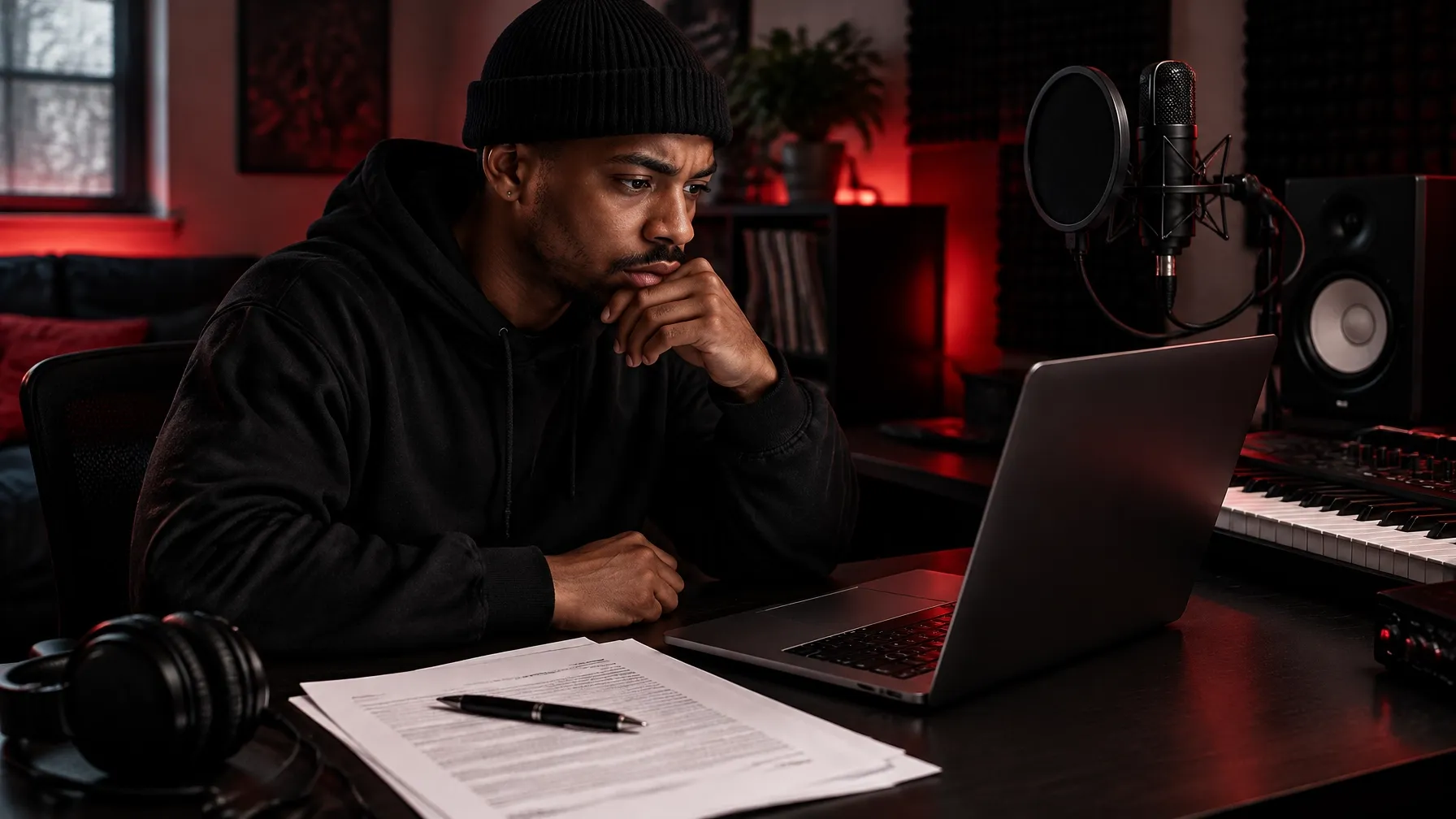
Do not sign away voice or likeness rights casually. If the language is unclear, get advice from an entertainment attorney or qualified rights professional before signing.The bigger picture: labeling and artist protection are moving togetherThe Suno case is part of a growing wave of AI music litigation. Earlier cases involving Suno, Udio, major labels, publishers, and independent musicians have focused heavily on alleged copyright infringement and the use of recordings in AI training.Coverage from
Rolling Stone,
Music Business Worldwide,
NME, and
Pitchfork have highlighted how this case opens another legal front: identity rights.In July 2026, music industry groups including IFPI, RIAA, A2IM, WIN, IMPALA, The Recording Academy, SAG-AFTRA, and the Human Artistry Campaign announced a voluntary track-level labeling framework.The two main labels are:
AI-Generated: generative AI created the entire recording or most of its creative elements.
AI-Assisted: the recording was substantially created by humans, with AI used for certain expressive or production elements.
The labels are intended to travel through music metadata and help listeners understand how AI was used. The initial framework focuses on sound recordings and does not yet cover every use of AI in lyrics, composition, music videos, or cover art.
Variety’s reporting on leaked Suno code also added to the industry conversation about training sources, data transparency, and consent.The direction is becoming clear: transparency for listeners, permission for artists, and separate accounting for separate rights.Radio-ready talking points for RAPNTV
The Suno lawsuit is different because it focuses on artists’ names, voices, likenesses, and identities: not only copyrighted songs.
Independent artists should treat their voice and persona as commercial assets.
A copyright license for a recording may not automatically include permission to clone an artist’s voice or likeness.
Before signing an AI agreement, ask about opt-in status, payment, duration, sublicensing, and exit rights.
The new AI-Generated and AI-Assisted labels could give listeners more information about how music is made.
This article is for general information and is not legal advice. Laws differ by state, and the Suno case is still developing.For more artist-protection breakdowns and industry news, keep it locked to
PowerJDM.com and
PowerJDM.com/app.Sources and further reading
Rolling Stone: Jason Isbell and other musicians sue Suno over artist identities
Music Business Worldwide: Suno identity claims and full complaint
Filed complaint in Jason Isbell et al. v. Suno, Inc.
NME: Musicians file lawsuit alleging Suno copies artist identity and style
Pitchfork: Jason Isbell sues Suno
Variety: Suno hack and alleged training sources
IFPI: AI-Generated and AI-Assisted labeling initiative
SoundExchange: Digital performance royalties
The Mechanical Licensing Collective